

Fitness Advertising: Meet Your Goals

Making Moves for Engagement

Start Now

Fitness Ads

Compared to social, native ads in premium environments are:

+24% more likely to lead to purchase

How is the industry evolving?

Wellness has become a sustained consumer priority. In 2025, 84% of US consumers, 79% of UK consumers and 94% of Chinese consumers described it as a top or important priority. Meanwhile, the global wellness economy reached $6.8 trillion in 2024 and is projected to approach $9.8 trillion by 2029.

Digital fitness is growing particularly quickly, with the global fitness-app market forecast to expand at a compound annual rate of 28.6% through 2030. AI-enabled coaching, wearables and predictive analytics are creating more personalized experiences, while continued demand for in-person services points to an increasingly hybrid market. For health and fitness brands, a strong digital presence is now essential to reach audiences, demonstrate credible value and remain competitive as consumer choice expands.


Source: McKinsey, The Future of Wellness Trends Survey, 2025 | Technavio, Fitness App Market Analysis and Forecast 2026–2030

How has spending on advertising changed over time?

A consumer-centric experience contributes significantly towards better engagement among health-conscious audiences. In the fitness industry, it’s become especially important when looking to connect with customers, as there’s no shortage of available alternatives for people to manage their health. The challenge, however, is that heavy competition in the digital space is making it difficult for fitness brands to stand out and attract loyal users.

While it’s not hard to find a brand’s presence across social media platforms, it’s also not the only way to drive growth and build revenue. Open web advertising provides the opportunity for fitness brands to deliver campaigns to the right audiences, at the right time, in an environment that consumers already trust. Moreover, open web advertising platforms with direct, first-party relationships with customers provide those desired, tailored experiences, while affording brands the opportunity to reach new audiences and accelerate their business.

84% of US consumers consider wellness a top or important priority, alongside 79% in the UK and 94% in China.

Source: McKinsey Future of Wellness Survey, 2025

Nearly 30% of US Gen Z and millennials say they are prioritizing wellness “a lot more” than they did one year ago.

Source: McKinsey Future of Wellness Survey, 2025

47% of US consumers use connected devices for fitness and health tracking.

Source: Deloitte US Health Care Consumer Survey, 2025

$6.8T global wellness economy in 2024
+7.9% growth year over year
$9.8T projected market size by 2029

Source: Global Wellness Institute, 2025

How to get started with Fitness advertising

By leveraging effective marketing strategies, fitness brands can successfully attract and retain customers at every stage of the customer journey.

Awareness

How to increase awareness

Identify high-intent audiences who are interested in fitness. Introduce your brand first, creating an impactful and aspirational message that resonates. As your goal is to have people learn more about your brand, leverage blog content that shares fitness tips, healthy recipes, and other useful information that aligns with your brand values and attracts relevant audiences.

Key KPIs:

Viewability and CTR

Case Studies
Engagement

How to engage your audience

Build on your brand story by promoting exclusive content, such as workouts, exercise tutorials, meal plans, and supplement guides. By providing clear and comprehensive information about what you're bringing to customers, you're helping them make more informed decisions about their potential purchase. Ads that best garner engagement at this stage showcase quick fitness tips, tutorials, or testimonials with other fitness professionals and users to show audiences that your brand does as promised.

Key KPIs:

Engaged Visits, Landing Rate, Time Spent

Case Studies
Conversions

How to convert

Now that your audience has a better understanding of your brand or program, it's time to entice them towards taking the desired action. For conversion goals, show a video experience that promotes your product or app, with special offers that encourage subscriptions, installs/downloads, or sales. When it comes to efficiency, you'll also want to prioritize cost-per-install, return on ad spend, and customer lifetime value.

Key KPIs:

Sales, ROAS, Downloads, Subscriptions

Case Studies

Fitness Ads Best Practices

Creative

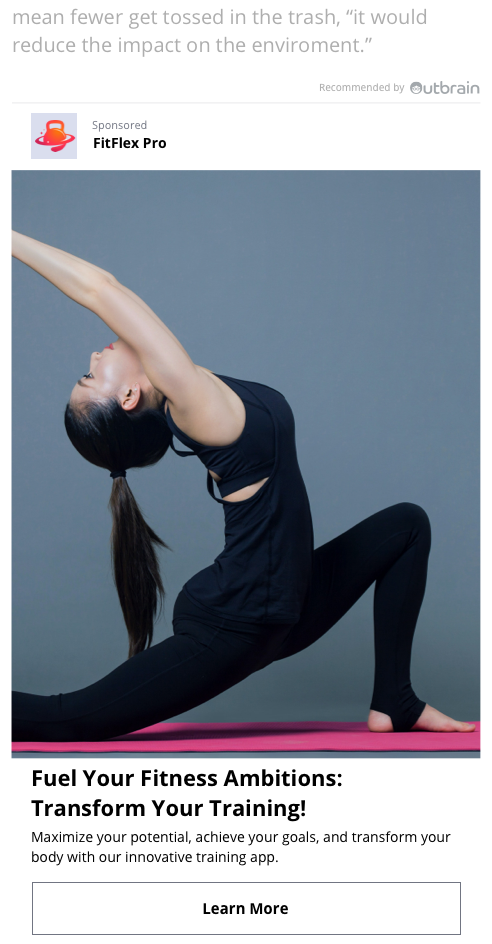
Use lifestyle images of people doing exercises, while incorporating the product benefit in your messaging. One effective way to generate greater interest and intrigue is to pose questions that answer consumer pain points.

Content

People love to see real-life stories of individuals who have achieved their fitness goals. Use compelling visuals and testimonials to showcase how your product or service has helped others transform their bodies and lives.

Landing Page

Ensure that your landing page has a clear and visually appealing above-the-fold combination of copy and action form. Showcase press coverage and other conversations about your brand.

Building or diversifying media mix

One, two, or even three channels is often not enough for a robust marketing campaign. While the content of your ad is important, where you advertise says just as much about your brand among consumers.

Compared to social, native ads in premium environments are:

44 more trusted
21 more clicked on
24 more likely to lead to purchase

It's simple for marketers to adapt their existing assets to the open web, safeguard their brand, and maximize ROAS in the process.

FAQ